IMAGE: V.I.T.R.I.O.L & Ta'wil

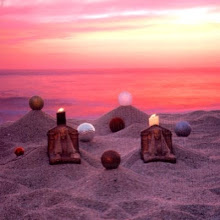
IMG 01: Original image drawn by Trey Spruance, themed upon IMG 02

IMG 02: Taken from a Moorish Orthodox Science Temple brochure. The brochure seems to be synonymous with the renown concept of ‘Miracle Healing’ potions, as sold by many a conman. Sold as Moorish Health Products (herbal preparations). Image source: Sacred Drift: Essays on the Margins of Islam by Peter Lamborn Wilson

V.I.T.R.I.O.L.

The Latin phrase, VISITA INTERIORA TERRA RECTIFICANDO INVENIES OCCULTUM LAPIDEM, when translated to English is ‘Visit the interior of the Earth and in rectifying (purifying) you shall discover the hidden Stone’. This has been interpreted as a message inciting the initiate to delve into his own being in order to find arcane wisdom. A visit is a two-way journey, like the course followed on a labyrinth, which ends by returning to the starting point. The initiate must not seek to remain inside. He goes and comes back. He visits the interior, the inside. 'As above so below' and 'What is inside is also outside'. The Earth element corresponds to an 'outside' and a 'below' in a cosmic & suprasensible sense. By purifying our Earth, through the Work upon our Earth, we perfect the body in conjunction with the soul. And in doing so the dense body merges with the subtle aspects, whence we discover the 'hidden stone'. Stone is of the Earth, but when discerned under the Hermetic scrutiny a profound insight is awoken. The same Latin phrase also brings to our attention the acronym: V.I.T.R.I.O.L

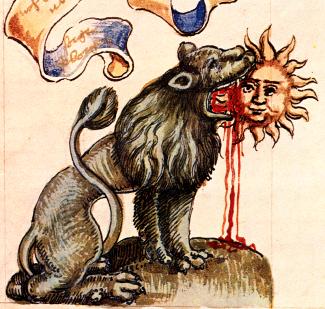
As a chemical element, vitriol is the hydrous sulphate of a metal. Blue vitriol is copper (Cu), green vitriol is iron (Fe), and white vitriol is zinc (Zn). Sulphuric acid (known as 'oil of vitriol') is formerly prepared from green vitriol and is the highly corrosive liquid that attacks and dissolves many metals and other intractable substances via release of acids from their salts (sulphates). Its production is the most important and fundamental of all the chemical industries. It is used in the creation of hydrochloric and nitric acids, in car batteries & petroleum refining, the fabrication of ether and of nitro-glycerine, etching iron & removing iron scale from forgings, fertilisers, explosives, detergents, dyes. It is also a powerful dehydrating agent, having a strong affinity for water, and eating through paper, wood, clothing and human tissue. However, it has no effect on gold. Alchemically, vitriol was a prominent liquid where all subsequent reactions were effected. Green vitriol is symbolized by the green lion in Hermetic etchings & woodblock prints. After green vitriol is collected, it is heated and broken down into iron compounds and sulphuric acid. A heavy, corrosive, oily liquid, colourless when pure but brown when the acid is separated by distillation; the sulphur being the more electronegative of the two elements, thus producing an odour similar to rotten eggs (hydrogen sulphide). Further distillation produces the combined action of sulphur dioxide, oxygen, steam, and nitric fumes yielding a nearly odourless yellow oil. Due to its corrosive qualities, vitriol is used as a descriptive expressions such as 'bitterly abusive' or 'intense animosity' and, in addition, the phrase 'To injure with vitriol'. The word vitriol is derived from the Latin 'vitrum' meaning glass. This should invoke the notion of featureless, empty, diaphanous etc. and to draw upon Traditional parallels, the Bardo Th
ödol emphasises the importance of the 'Clear Light' that must be realized through gnosis.

Ta'wil

Trey Spruance: There's this thing in Shi'ism called ta'wil, it's this idea where you take anything back to its root significance its original self. So say you have a ball point pen, and you start looking at it, you start peeling away the layers of what it's made of, what it's molecular components are, what its history is. Until you've dissected it back to its void-ness, and back to its original spring, what organized it into itself. And then you realize of course, ultimately it came from God. It has to do with the burning of surfaces or appearances, sort of corroding them until a stronger or deeper reality presents itself. Its a process of decay. Intentional sort of melting.


Definitively; ta'wil is mystical hermeneutics or spiritual exegesis. Ta'wil, conversely, means 'to cause to return,  that is, to ascend or lead back (restore to its origin). It does not consist in bringing down to a lower level; it must carry sensible forms back to imaginative forms and then rise to still higher meanings; to proceed in the opposite direction (to carry imaginative forms back to the sensible forms in which they originate) is to destroy the virtualities of the imagination. Ta'wil is what saves appearances by symbolizing them with their original form. It is the soul's own conversion, because it is precisely the soul and not anything else that has 'descended'. It is essential symbolic understanding, the transmutation of everything visible into symbols, the intuition of an essence or person in an Image which partakes neither of universal logic nor of sense perception, and which is the only means of signifying what is to be signified. Rational thought must be carried through the irrational until it becomes supra-rational. Allegory is a rational operation, implying no transition either to a new plane of being or to a new depth of consciousness; it is a figuration at an identical level of consciousness, of what might very well be known in a different way. The symbol announces a plane of consciousness distinct from that of rational evidence; it is the 'cipher' of a mystery, the only means of saying something that cannot be apprehended in any other way; a symbol is never 'explained' once and for all, but must be deciphered over and over again, just as a musical score is never deciphered once and for all, but calls for ever new execution.

The ta'wil presupposes a flowing of symbols and hence the active Imagination, the organ which at once produces symbols and apprehends them; it presupposes the angelic world intermediate between the pure Cherubic intelligences and the universe of sensory, historical, and juridical facts. By its very essence the ta'wil cannot inhabit the realm of everyday fact; it postulates an esoterism. The ta'wil of texts presupposes the ta'wil of the soul: the soul cannot restore, return the text to its truth, unless it too returns to its truth. Ta'wil is, then, initiatory and Gnostic by definition: it is a practice conferring saving or sacramental gnosis. As initiation, it implies a new or spiritual birth, the Gnostic being resurrected from one state of being into another, while as knowledge, it is mystical. But more than that, and most importantly, it is ontologically determined knowledge, knowledge made different by virtue of a different state of being, of being a different 'person'. According to this view, it is the soul's mode of being (modus essendi) that determines its mode of knowing (modus cognoscenti). That is to say, our knowing is being, and these states or worlds are states or worlds of being. Indeed, there is a hierarchy of such states or worlds, and it is this ontological hierarchy that ta'wil symbolizes, binds together, realizes, indeed, enhances, in its practice. Moreover, since all the states of being (which are states of knowing also) express or mirror themselves in states that are correlative to them and of which they are functions (exoteric and esoteric being ontologically primordial), ta'wil develops through a spiritual 'typology' or, better stated, by a continuous unveiling or revelation of the spiritual beings to which the hermeneutical levels, spiritual organs and worlds, correspond.

Ta'wil is bringing something back to its archetypal donor. This is not an allegorical process, as has sometimes been claimed. It returns something, not to its historical origin, but to its transcendental origin. Because it goes beyond the letter (that is, the past without possibility), this textual exegesis becomes a true eduction, an exegesis of the human being. There is a systematic development of the correspondences between earthly and heavenly hierarchies, thereby revealing the real agents in humanity's hidden history. This hierohistory, as it were, is that of an incantation, da'wat, which begins 'in Heaven', continuing from prophet to prophet, and consummating itself only with our Aion in the guise of external events, Qur'anic passages leading us back to hidden events which are entirely real, but of an order which is other than that of visible events before the big bang, before time, therefore; outside of time. For those besotted with 'historical trend', latitudinal (horizontal) expansion, or the notion of a linear and irreversible progression; the 'transgressive' vigour of symbolism will inevitably wither away into inoffensive allegory. What we have learned about the 'disciples of Khidr', the trans-historical meaning of the affiliation which unites them vertically with the invisible celestial assembly, implies the idea of a Tradition whose line is vertical, longitudinal (form Heaven to Earth), a tradition whose moments are independent of the causality of continuous physical time but relate to what Ibn 'Arabi calls the tajdīd al-khalq, the recurrence of the creative act, or the renewal of creation at each instant or breath. This is the Theophany.

With the symbols of alchemical vitriol, Islamic ta'wil and the Moorish antiseptic healing potion invoked simultaneously we can refer further to what in Hermetism are called Corrosive Waters (or poison), in the special sense of substances capable of artificially provoking the dissociation between different elements of the human composition. The texts, nevertheless, either advise against the use of these waters and 'violent Fires' or recommend the utmost precaution because, they say, they burn rather than wash; they dissolve bodies but cannot save spirits; they work not with the 'slow fire of nature' but with the 'impatient haste that proceeds from the Devil'. Their action is abrupt and discontinuous; so the difficulty of keeping them active in the changing state is all the greater.

Since the bottle of vitriol is related to the 'sacred' or 'immortality-conferring' drinks, like the soma of the Vedas, the haoma of the Iranians, the mead of the Eddas and even wine itself. Originally it was a question of symbols: the holy drink was the Ether of Life, the principle of exaltation and inner regeneration, which to come into contact with was for man a much likelier possibility in the beginning that it was in later times. For the tradition maintains that at a certain point in time, such a drink ceased to be 'known' and something else was substituted for it, which was no longer just a symbol, but a real drink composed of substances adapted to produce a psychophysical state constituting a favorable condition for the spirit to be able to realize the true and immaterial soma, haoma, etc. One of these artificial means to reach an exaltation or inebriation was probably thought to be a means of arriving at an effective ecstasy. The same can be said of that which, in more disconcerting jargon in some alchemical texts, goes by the name of urina vini, meaning 'urine of a drunken man'. 'Urine' is explained by the root UR, which in Chaldean designated fire (Latin, urere, 'to burn') and with the anagram UR inferioris naturae ('Fire of the lower nature'), which is precisely the humid Fire agent in these methods. Specifically, 'urine of a drunken man' alludes to the state of exaltation, 'inebriation', or 'enthusiasm' (mania), which is linked to one of the manifestations of such Fire.

Corrosive Flames
(Burning Surfaces)

The hermetic fire is a fire that does not burn, it is a magic fire, an interior fire, subtle and occult. "The Opus is accomplished neither by (vulgar) Fire nor by the hands, but only by means of the inner heat," as with a 'rising fever'. The hermetic Philosophers recognize various fires, which are to be brought together in the work so that one may help the other. There are three Fires; the first 'Fire of the Lamp' - that is, Light-Fire, illuminated Fire 'continuous, humid, airy, proportioned; the second is the 'Fire of the ashes', that is, a fire that is sheltered in the interior, analogous to the so-called natural Fire, on which the athanor is placed; finally there is the Fire against nature, 'Our Water', which is related to the Fountain, and destroys, dissolves, calcinates. But often these three fires are used in the texts as symbols to mean the three phases of the Magnum Opus (work).

The main difference lies between 'natural Fire' and 'Fire against nature'. Unnatural Fire is the Fire of the hermetic Art referring to the aspect of the 'one thing' as the basis on which it is 'Nature that dominates itself, that kills itself' and thus is capable of reacting against the fact of being in order to infuse in it a higher discipline that sustains the fallen and erring natures, 'rectifying' them. After which, the two fires - that of the Art, directed by the operator's will, and that of Nature, which is the vital fire, that is to say, the heart and the blood (in alchemical symbol) - are united and, as has been said, the one increases, fortifies, and develops the action in the inner depths of the other. Besides the fire called intermediate, unnatural, and composite, a third is mentioned, the 'Fire that kills', which recalls the primordial 'fixations', that is to say, the absolute individualization of the force. The philosophical Fire is that with which the philosophers was the material, that is, purify the Mercury"; and the 'unnatural Fire', or 'intermediate', is the 'result of the union of the natural Fire and the Fire of the philosophers which is against nature'. This unnatural Fire is the cause of the putrefaction and death of the composition and of the perfect and true philosophical solution - and to this Fire 'against nature' remains the task of reanimating the hidden Fire in the other, liberating it from the prison in which it has been locked. This is a dense icy prison that contains a forgotten heat. When the heat is awoken it melts the density that contains it. Imagine that fire could be diluted with water and then frozen, this is a paradox. The fire's role is to melt the ice and be flowing with the water again. Whence, the water must evaporate so the fire can burn in solitude. Yet the fire dissolves, corrodes, burns, destroys and c
ooks primary material until it is transformed into it's original state.

This is the caustic method in which ta'wil and vitriol operate in order to resurrect the primordial essence. Ta'wil's inquiry that 'leads back' through the motive, the 'why?' and vitriol's sulphuric, acidic penetration of concrete matters.

William Blake: The Marriage Of Heaven And Hell: The ancient tradition that the world will be consumed in fire at the end of six thousand years is true, as I have heard from Hell. For the cherub with his flaming sword is hereby commanded to leave his guard at the Tree of Life, and when he does the whole creation will be consumed, and appear infinite and holy, whereas it now appears finite and corrupt. This will come to pass by an improvement of sensual enjoyment. But first the notion that Man has a body distinct form his soul is to be expunged. This I shall do by printing in the infernal method by corrosives, which in Hell are salutary and medicinal, melting apparent surfaces away, and displaying the infinite which was hid. If the doors of perception were cleansed everything would appear to Man as it is: infinite. For Man has closed himself up, till he sees all things through narrow chinks of his cavern.

BIBLIOGRAPHY:


IMAGE: Secret Handshake

IMG 01: Page 01 of First Grand Constitution & Bylaws.
IMG 02: From Sacred Drift: Essays on the Margins of Islam by Peter Lamborn Wilson. Described as Moorish Freemasonry symbols.
IMG 03: From the First Grand Constitution & Bylaws official document.
IMG 04: From the Book M official document.

In its oldest form the handshake signified the handing of power from a god to an early ruler. This is reflected in the Egyptian verb 'to give', the hieroglyph for which is an extended hand. One of the most peaceful and trustworthy gestures we have today is the firm clasp of hands between two people. It acknowledges friendships new and old, and confirms business agreements between people of honourable intent. Once upon a time, before we became so enmeshed in our webs of legal red tape, no written contract could bind a man more firmly to his commitment than giving his own hand on it, and family and heirs would honour that 'gentlemen's agreement' long after he had passed away.

When two strangers offer their hands towards one another it is the yielding to peace and an agreement to communicate. Having a grasp on one another's palms renders them non-combative and is thus a surrendering to co-operation. The greeting of the European settlers and the North American Indians consisted of the flat palm raised with fingers pointed to the sky, showing the absence of concealed weapons, followed by a clasping of the hands. Today, the handshake has become so universally a sign of mutual respect, that it is considered a personal insult to refuse an extended hand when greeted or introduced. It is also considered a sign of ignorance if the handshake is not given with firmness, warmth, smile, and most important, with eye contact and never with a limp hand. It is common knowledge that there is many secret handshakes amongst the Freemasons indicating a 'secret liaisons' amongst their companionship as 'Friends of God' expressed as Divine Unity.

During the early part of the 14th century in Basel, a medieval Christian fellowship emerged, known as Gottesfreunde (Friends of God) it then spread to Germany and the Netherlands. The Friends of God included men and women representing all social classes and states of life, clerical, religious, and lay. They sought as a community to cultivate a life of interior devotion and intense prayer because they felt a need to draw together in love, piety, and holiness, the Friends of God presaged the 16th-century Reformation. Some of its leaders, attacking corruption in the Western church and expecting a subsequent intervention of God, were tried and executed for heresy.

This idea of 'Friends of God' is not unfamiliar to the Muslims in the term
walā (plural awliyā) which has most commonly, and totally inadequately, been translated by the term 'saint', a translation that opens the door to endless confusion and ambiguity, so much so that when the word is applied to God it is frequently translated as 'protector'. In fact, as is indicated by the Persian term dāst which is its translation in current usage, it always bears the sense of 'Friend'. The idea originates in the verb form tawallā, which means 'to take as a friend'. Hence the definition of walā is 'he whose case God takes up in friendship'. The Arabic root besides meaning 'friend' also possesses the meaning of initiatic dominion or power in the term walāyah. The word walāyah has a Latin equivalent in the word affinitas. The link of spiritual affinity denoted by the walāyah corresponds in Shi'ism to the Christian notion of communio sanctorum. The handshake symbolizes this archetypal idea of 'bond' and 'alliance'.

BIBLIOGRAPHY:

IMAGE: Crows & Skulls

IMG 01: Page 01 of First Grand Constitution & Bylaws. Original image by Trey Spruance based on alchemical concepts.

IMG 02: From an out-dated version of the Web Of Mimicry website. Original image by Trey Spruance.

IMG 03: From a diagram outlining seven stages of alchemical process in The Glory Of The World or Table Of Paradise, in The Hermetic Museum edited by Arthur Edward Waite.

IMG 04: From a Secret Chiefs 3 merchandise shirt. Image by Trey Spruance based on Image 05.

IMG 05: Plate 09 of Philosophia Reformata by Johann Daniel Mylius.

Let it be known that birds are the flight of thought. Not only bird however, but winged creatures in general such as angels. The wings often denote intuition, spiritual potentiality and the consciousness-transcending goal of the self. This visual impression is rather like a snapshot of an evolving process as it ascends the quintessential hierarchy. The initial stage of alchemy is the blackening, nigredo, which the alchemists called 'a black, blacker than black', antimony, pitch, coal, lead burnt copper, scorched ivory, grand confusion, calcination, nox, melanosis, etc. Its ontological status is likened to an existential void, an abyss. The key symbols that augment the melanosis are the raven and the skeleton/skull. The skull is the vessel of alchemical transformation, wherein one undergoes a living death, identified only with the vacuousness of the ego's relative position; a suffering of spiritual poverty. The skull soliloquies of Faust and of Hamlet are reminders of the appalling senselessness of human life when 'sicklied o'er with the pale cast of thought'. C.G. Jung says that in some cases the human skull, was considered to be the actual vessel of transmutation and was used in the work because the brain is the lodging house of the divine part. 'The Cranium Of Death', caput mortuum, is the head of the black Osiris; the mercurius philosophorum who undergoes death, resurrection and transformation into an incorruptible state. Thus the anonymous author of the Novum Lumen Chemicum exclaims: "Our heaven! O Our water and Our Mercurius! O dead head or dregs of our sea!... And these are the epithets of the bird of Hermes, which never rests".  This bird of Hermes is the raven, of which it is said: "And know that the head of the art is the raven, who flies without wings in the blackness of the night and the brightness of the day". He is a restless, unsleeping spirit, "Our aerial and volatile stone, a being of contradictory nature". So, too, is E.A. Poe's raven, which has been "wandering from the night's Plutonian shore," and which becomes the capital or dominating principle of the narrator's thoughts by perching upon the bust of Pallas. Once again, an alchemical approach would seem to indicate that Poe's raven is not simply a symbol for melancholy, but carries many other connotations as well. In other literature the raven is akin to the Moor, Ethiopian, and Negro, niger, due to his passé image as black, sinful man. The name of the Ethiopians signifies, literally, 'burnt faces' (aithi-ops). It is from the same root, aith, that the word aither derives; and the æther can be considered as a kind of higher fire, that of the 'Empyrean Heaven'. The Raven's Headâ, caput corvi, is directly related to the skull via decapitation. Beheading is significant symbolically as the separation of the 'understanding' from the 'anguish' which nature inflicts on the soul. It is an emancipation of the cognitio which is situated in the head, a freeing of the soul from the limitations of nature.

This great liberation is the death of the commanding self, nafs amara, known as the ego. The black substance of our own shadow must be met and reconciled before a healing commences: "With the death of the lion the raven is born", meaning, when the desire dies, the blackness of death sets in. The birth of a healing power, from the blackening, belongs to the archetype of the wounded healer. It reflects the psychological capacity as stated by Karl Kerenyi; 'to be at home in the darkness of suffering and there to find the germs of recovery with which as though by enchantment, to bring forth Asklepios, the sun-like healer. This healer's mother is named Coronis, meaning 'crow maiden'. Also, there were three champions known as Raven Kings. Odin the Norse God who had two raven prophet-messengers (winged black mercuries), Huginn and Munin. The second was King Arthur, who in Wales and Cornwall was believed to inhabit the raven's body, while his half-sister Morgan le Faye was the Raven Queen Morrigan, a death-goddess who took the form of a raven. The third king particularly connected with the raven was Bran the Blessed, the Irish cult-hero, whose very name 'Bran' means 'raven'. Bran was also connected with Saturn, the 'black' Planet, which symbolized alchemical lead. Mythologically, Bran and Saturn were both eaters of flesh, the corrosion of substance. Through the Calcination, a lighter condition can emerge, accordingly, in Northwest native lore, the raven carries a ball of light into the sky, so we no longer live in darkness. In Vedic texts, Saturn is described as riding a crow and carrying a skull. The raven is also a widespread icon of superstition. In the Middle East, this dark bird was known as 'Father Of Omens', abu zajir. As eaters of carrion, ravens were messengers of death, pestilence, and battle. It was believed that these flesh-hungry birds could smell the scent of death upon a person before they died. In paintings, the raven is depicted flying over battlefields, eager to feast on cadaver.

ISA 32:11: After the Battle of Armageddon, ravens will descend upon the lands of the wicked.

Putrefaction must do its work before the body can be joined to the soul, for solution and putrefaction begin with a fetid smell, and the processes gradually develops, and therefore the caput corvi is known as a deadly poison. The odour is rather intellectually than sensuously perceptible. The blackness precedes the whiteness, for, all things that are to grow and receive life must first putrefy. However, the putrefaction is the unification of the white (dove) and the black (raven), the latter being the spirit that dwells in the tombstone. The ravens that gather up the seed (or the product of the union) and then fly with it to the tops of the mountains represents the helpful spirits of familiars who complete the work when the skill of the artifex has failed him. They are not, as in Faust, beautiful angels, but dark messenger of heaven, who at this point themselves become white. The raven is the black soul of the king and queen, which must purify through their alchemical wedlock.

BIBLIOGRAPHY:

IMAGE: Secret Chiefs 3 Logo

IMG 01: The Secret Chiefs 3 logo. Drawn by Trey Spruance.

IMG 02: The Secret Chiefs 3 logo. Drawn by Mike Bennewitz.

IMG 03: The black stone in the Ka’bah at Mecca

-GUARDIANS OF THE HOLY LAND-

This is the Secret Chiefs 3 logo, so familiar to most of us by now. As far as I gather this symbol suggests a concept known as the ‘Guardians of the Supreme Centre’, especially in regards to the Sons of Seven (beni shaybah) who were the guardians of the black stone that is set into the Ka’bah (Cube) in the centre court of the Great Mosque, (al-Masjid al-Ḥarām), in the heart of Mecca. The function of ‘guardian’ corresponds to a specific kind of initiation, one that can be described as chivalric if we give this term a meaning which is wider than usual assumptions. The spiritual centre is synonymous with the concepts of the ‘Holy Land’ and the ‘Sacred Stone’. However, the Israelites are not the only people who have assimilated their country to the ‘Heart of the World’, and who have regarded it as an image of Heaven. The use of the same symbolism is found with other peoples who possess a ‘Holy Land’, that is, a country where a spiritual centre has been established which has for them a status comparable to that of the Temple of Jerusalem, and so, it can no longer be a question of only Palestine, but rather all holy centers such as Omphalos which was always the visible image of the ‘Centre of the World’ for the people inhabiting the region where it was placed in Delphi. Likewise for the castle in Wolfram Von Eschenbach’s Parzival, which is described as invisible and unreachable. Only the elect can find it, either out of sheer chance or through a magical spell, since it usually vanishes from the sight of its seekers or is guarded by a heavenly militia of knights or warriors, as the crossed swords of the Secret Chiefs 3 logo indicates via blocked access. In Parzival the castle is presented as “strong and mighty”, with smooth walls that would make it impregnable even if it were besieged by all the world’s armies. In the castle are “many splendid things that have no equal on this earth; but those who look for it unfortunately never find it, though many start this quest. In order to see it, one must arrive in it without knowing it.” The place in which it is built is deserted, wild, and ghostly: It is the Montsalvatsche in the Lands of Salvatsche, and “the path leading to it is filled with ambushes.” Wolfram adds: “one is not likely to ride so close to Montsalvatsche without engaging in a dangerous fight or without encountering that expiation of sins which the world calls ‘death”. The knights of the Grail, or Templars (Templeisen), prevent people of all nations from approaching, with the exception of those who are indicated by an inscription that appears on the Grail itself: they commit themselves to fight to the death any invader. In relation to this, It can be said that the Grail’s knights ‘live dangerously’. Although destined to the Grail from on high, Parzival had to achieve it by effort. His virtually exclusive outward activity, the activity which wins him the Grail when at last he pursues it in the right spirit, is that of knightly combat. When one speaks of the ‘knighthood of the Holy Grail’; or of the ‘Guardians of the Holy Land’, what must be understood by the two expressions is exactly the same thing. It remains for us to explain, as far as possible, exactly what is the function of these ‘guardians’, a function which belonged in particular to the Templars :

Book M - Page 6: The darkness at the approaches is a wasteland riddled with corpses. Templeisen prevent people of ALL nations from approaching, only one summoned can find the way. Any invader will be reduced.

Book M - Page 7: Our job is to defend the Temple at all costs.

Book M - Page 8: …the Center in INVIOLABLE. Just remember that the darkness at the approaches to the pole is far more treacherous than even Hell itself. It’s therefore advisable that you don’t go anywhere near the region where M becomes perceptible. If you are in the habit of reducing things to make them, you know, comprehensible, ‘use-full’, the foes you will encounter in the darkness of that region cannot be beaten or outwitted, and they will take you permanently out of the game for approaching that vicinity.

On the one hand, they are the defenders of the ‘Holy Land’ in the sense that they bar from access to it all who lack the requisite qualification to enter, and they constitute what we have called its ‘outer covering’, that, they conceal it form the eyes of the profane. On the other hand, they nevertheless assure certain regular relations with the outside, yet they remain at the boundary of the spiritual centre, taken in its widest sense, or at the last precinct, by which the centre is both separated from the ‘outer-world’ and placed in relationship with it. In the case of the Templars, there is something more to be considered: even though their initiation was essentially ‘chivalric’, as suited their nature and function, they had two sides to their character, being both military and religious; and it had to be so if they were, as we have many reasons to think, among the ‘guardians’ of the supreme Centre, in which spiritual authority and temporal power are reunited in their common principle, and which, as it were, stamps the recognizable sign or mark of this reunion on all that is directly connected with it. In the Western world, where the spiritual takes a specifically religious form, the true ‘guardians of the Holy Land’, insofar as they had any official existence, had to be knights, but knights who were monks at the same time, and in fact that indeed is what the Templars were. If the Templars were indeed what we believe them to have been, in order to fulfill their allotted function concerning the specific tradition, that of the West, they would have to remain attached outwardly to the form of this tradition; but at the same time thy would need to have an inner consciousness of real doctrinal unity so as to be capable of communication with the representatives of other traditions. These considerations make it clear why the destruction of the Order of the Temple should have entailed for the West the rupture of regular relations with the ‘Centre of the World’; and it is precisely from the fourteenth century that the deviation inevitably resulting from this rupture must be dated, a deviation which has gone on gradually becoming more and more accentuated down to our own time. This descent can be no more obvious than in the legend of the white stone which fell from heaven and blackened, synonymous with the fall of Lucifer. The color black designates what is occult, unmanifested, as is the Supreme Center during the decline of every traditional civilization. In Islamic tradition the pilgrims to Mecca believe that the stone absorbs their sins when they touch it, redeeming them from the sins of Adam which had caused the stone to become black. When Mecca was sacked in A.D. 930, the famous black stone was captured by the Carmathians, in whose possession it remained over 27 years, and it is a moot question whether the stone finally returned by them in exchange for a princely ransom was actually the original block or a substitute representing the notion of counterfeit. First of all, it is certain that the symbolic function of meteorites or stones fallen from heaven is very important, because these are the ‘black stones’ that feature in so many different traditions, from the stone which represented Cybele or the ‘Great Goddess’ to the stone which is enshrined in the Ka’bah at Mecca and which plays a part in the story of Abraham.

At Rome, too, there was the lapis niger. These ‘black stones’ are certainly to be counted as baetyls, that is, stones considered as ‘dwelling places of the Divine’, or in other words, as the vehicles of certain ‘spiritual influences’. In all cases, the baetyl was a ‘prophetic stone’, a ‘stone which speaks’, that is, a stone which yielded oracles, or near to which oracles were given, thanks to the spiritual influences of which it was the vehicle and the Omphalos of Greek tradition is very characteristic in this respect. Interestingly; meteorites are white at first but oxidize over a period of time. The stone set into the Ka’bah, at Mecca is often indicated as being a meteorite due to its composition. Clearly, meteorites the size of these large boulders would explode into tiny fragments on impact, and also leave a substantial crater. However, the literal truth is does is secondary to the symbolism of such stones being a link between this world and the heavens as an integral aspect of the Cosmic Axis which is invoked by all sacred centers. The black stone (al-Hajaruâ'l Aswad) is an irregular oval, about seven inches in diameter, with an undulating surface, composed of about a dozen smaller stones of different sizes and shapes, well joined together with a small quantity of cement, and perfectly well smoothed; it looks as if the whole had been broken into as many pieces by a violent blow, and then united again. Both the border and the stone itself are encircled by a silver band, broader below than above, and on the two sides, with a considerable swelling below, as if a part of the stone were hidden under it. This is symbolic of the vulva of the goddess al-'Uzza who was worshipped at the same location in pre-Islamic times, where she was she was served by seven priestesses. Her worshippers circled the holy stone seven times and did so in total nudity. al-'Uzza was an Arabian goddess who was regarded by the Bedouin tribes of central Arabia as the youngest of the three daughters of Allah, the supreme deity. She was worshipped in the form of a black stone, on the surface of which lay a mark or indentation called the 'Impression of Aphroditeâ'. But the error of reducing the Solar qualities into Lunar aspects must be avoided, and its key is in the comparisions drawn from Cybele, who was the Magna Mater of Phrygia in Asia Minor, and was associated with Mt Ida, near ancient Troy. Her worship was conducted by eunuch priests called Corybantes, and was characterized by wild orgiastic revelry and ecstatic dancing. Cybele was primarily associated with the earth, and in particular with a black stone enshrined at Pergamum. However she was not strictly of chthonian nature which is a common misconception to certain Western circles. Efforts have been made to derive Kubelē from the Greek term kubos and the Arabic qubbah. Qubbah has never meant 'vault, vaulted hall, cryptâ', as the author of this hypothesis believes; it means cupola or dome, the symbolism of which is 'celestial' and not 'terrestrial', and therefore exactly the opposite of the nature attributed to Cybele or the 'Great Mother'. But more importantly, the name is actually directly linked to the Hebrew gebal and to the Arabic jabal, 'mountain'. Thus Cybele is the 'goddess of the mountain'. This same meaning of the name Cybele is clearly linked to that of the black stone which was her symbol. In fact, it is known that this stone was of conical shape and, like all the baetyl of the same form, it must be considered as a miniature representation of the mountain as 'axial symbol'. In fact the Greek gematria of the words 'Omphalos' and 'Axis' both add to the same value: 911! On the other hand, since the sacred black stones are meteorites, this celestial origin suggests that the chthonian nature we alluded to at the outset corresponds in reality only to one of the aspects of Cybele. Moreover, the axis represented by the mountain is not terrestrial, but connects heaven and earth to one another; and we will add that it is along this axis that, symbolically, the fall of the black stone must take place as well as its final re-ascension; for here too, it is a question of the relations between heaven and earth through what may be called a 'trampoline effect' regarding the regeneration of man whereby, the deeper one falls the higher one may rise, akin to the Qabalistic notion of Spiritual correction. There can be no question, of course, of contesting the fact that Cybele has often been assimilated to the 'Earth Mother', but only of indicating that she also had other aspects; moreover, it is quite possible that the more or less complete forgetting of these, following upon a predominance attributed to the 'terrestrial' aspect, may have given birth to certain confusions, and in particular to the one that has led to the classing together of the black stone and the cubic stone.

BIBLIOGRAPHY: